
The handicap is the great equaliser of golf. It lets a 20-handicapper in Surrey play a fair match against a single-figure golfer from St Andrews, and it tells you, honestly, where your game stands. But what is a typical handicap in the UK — and how do you stack up?
Below is a clear, no-nonsense look at the average golf handicap across England, Scotland, Wales and Northern Ireland, using the latest figures from England Golf and the wider World Handicap System (WHS).
The headline numbers
According to England Golf and R&A data published under the World Handicap System, the average Handicap Index for golfers in the UK is roughly:
- Men: around 17.2
- Women: around 27.3
- Juniors (under 18): around 23
In old "CONGU" exact-handicap terms these would feel a touch lower, because WHS uses your best 8 of your last 20 scores. But for everyday conversation: a mid-to-high teens handicap is genuinely typical for a club golfer in Britain.
Why the men/women gap is smaller than it looks
A ten-shot gap between the average man and woman sounds large, but it shrinks fast once you account for tee choice and course rating. Women in the UK usually play from forward tees with a lower Course Rating and Slope, so when handicaps are converted to a Course Handicap for a given round, scores are far closer than the raw index suggests.
The takeaway: a 27 Handicap Index doesn't mean "27 over par every round" — it means roughly your best rounds are 27 shots above the rating of the tees you typically play.
How UK handicaps break down
A rough distribution of male Handicap Indexes in England looks like this:
Handicap range | Approx. share of golfers
Scratch to 4.9 =6%
5.0 – 9.9 = 17%
10.0 – 14.9 = 24%
15.0 – 19.9 = 24%
20.0 – 28.0 = 22%
28.1+ = 7%
So if you're sitting on a 14 handicap, you are — quite literally — better than the average UK male club golfer. A 9 handicap puts you in the top quarter, and anything under 5 is genuinely good amateur golf.
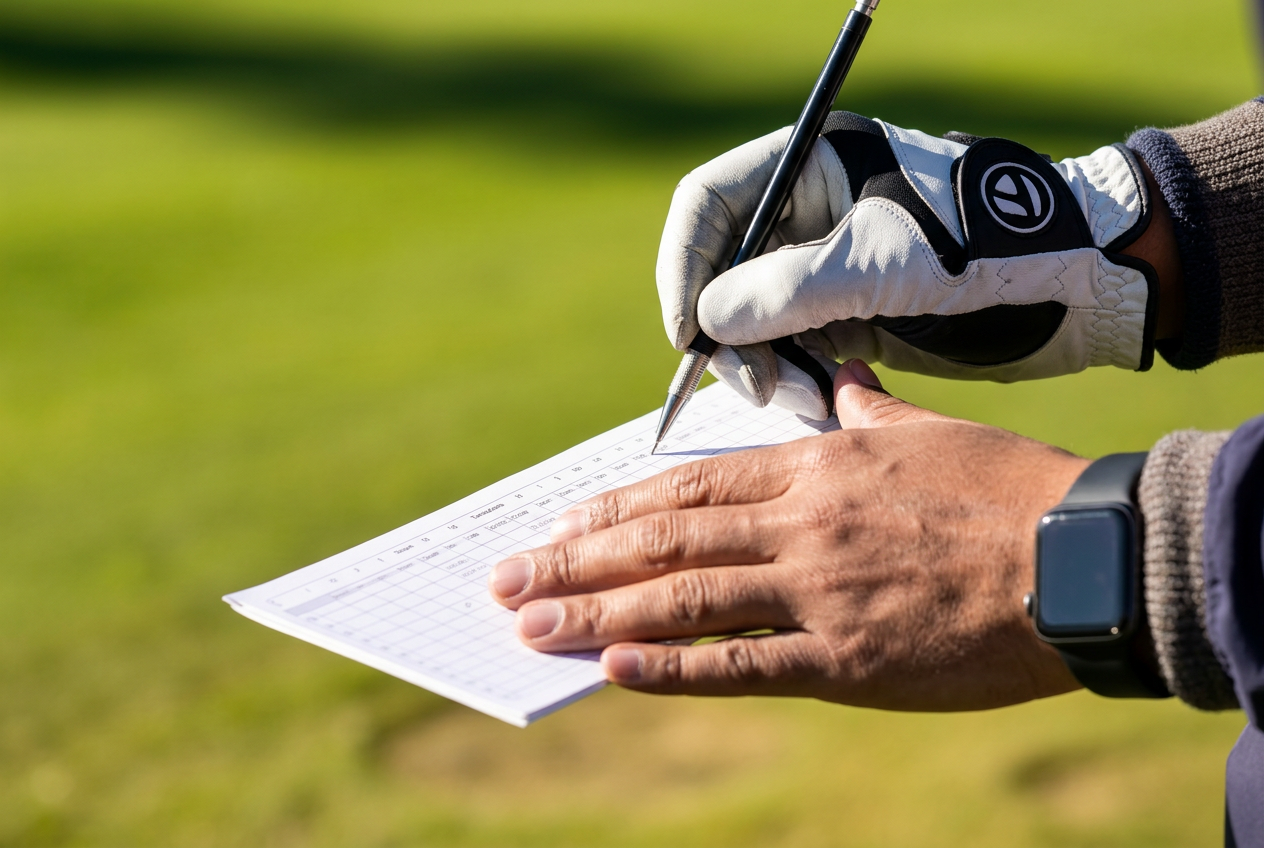
What counts as a "good" handicap in the UK?
A few honest benchmarks for British club golf:
- Beginner / improver: 28+ — you're still learning course management and consistency.
- Average club golfer: 15 – 22 — you'll break 90 on a good day and 100 most days.
- Solid club player: 8 – 14 — comfortably breaking 90, occasionally breaking 80.
- Low single figures: 1 – 5 — county-level golf is within reach.
- Scratch (0.0) or better: elite amateur territory; less than 2% of UK golfers.
Don't get hung up on a round number. The point of the handicap is to give you a fair fight, not a badge.
Why UK handicaps tend to be slightly higher than the US
If you've ever compared notes with American friends, you may notice US averages quoted at around 14 for men. There are two main reasons UK figures look a touch higher:
- Course difficulty. Links courses, wind, gorse and pot bunkers do not flatter scoring. Slope ratings on classic British courses are often genuinely tough.
- Weather. Wet rough, slow greens in winter and persistent wind make low scoring harder for half the year.
A 17 handicap on a UK parkland is not the same animal as a 17 handicap in Arizona — and the WHS knows it, which is why Slope and Course Rating exist.

How to lower your handicap (without buying new clubs)
If you want to move from the average toward the better half of the field, the boring answers are still the best ones:
- Putt more, hit balls less. Three-putts kill more rounds than bad drives.
- Play the percentages off the tee. A 200-yard fairway beats a 250-yard rough every time.
- Track your stats. Fairways hit, greens in regulation and putts per round will tell you exactly where shots are leaking.
- Practice the 100-yards-and-in zone. Most amateurs lose 6–8 shots a round here.
- Post every card. WHS rewards consistency; sandbagging your scores only cheats yourself.
If you want a quick reality check, our Handicap Calculator will turn your last few scores into a current index in under a minute — useful for tracking progress between official revisions.
The bottom line
The average UK golfer is a 17-handicap man or a 27-handicap woman, playing on a windy island where the weather rarely cooperates. If you're somewhere in that range, you're in good company. If you're below it, you're playing better than most of the country — and if you're above it, the path down is paved with short-game practice and honest scorecards.
Whatever your number, the handicap exists to make the game fair and to give you a target. Pick the next one down, and chase it.
Related reading
- What Is a Good Golf Handicap? — context for where you sit versus other golfers, beyond just the UK average.
- How to lower my golf handicap? — if you're above the average and want to do something about it, this is the practical plan.